What does my knitting have to do with my gender? More than I’d like. Less than you’d think.
I sometimes wonder what people assume about me when I knit in public. I wonder, and worry, if it’s assumed that I’m invested in the sort of traditional femininity that knitting seems to represent. I’ve discussed this a little in a previous post – do these so-called “alpha” manosphere assholes see knitting as a sign of the kind of woman they believe we should all be.
I don’t knit because I’m a woman. I don’t knit in a feminine way. I also don’t knit in a feminist, reclaiming-the-power-of-the-craft way. I knit and crochet because I like it (and probably because I’m stimming, but that’s another blog post). I look at pretty much anything I do and wonder how much of it has to do with me being a woman.
I feel best about myself when I feel feminine, but I recently realized that what I have been conditioned to understand as feminine is also what I have been conditioned to understand as beautiful. And chat, I do not feel beautiful. I also don’t feel nurturing, or supportive, or emotionally intelligent. I’m not motherly. I’ve never found traditional fulfillment in these traits or any power.
So when we think of knitting and crochet, or any fiber craft, as a feminine activity, I question if my aversion to that is personal or if there really is a larger societal misattribution happening.
Earlier this month I read an article in Art News about the burgeoning presence of fiber in the arts scene this year. “Fiber Art Has Officially Taken Over New York’s Museums and Galleries” by Alex Greenberger covers multiple exhibits, features, and retrospectives of fiber as painting and sculpture, at commercial galleries and museums like the MOMA.
Almost all the artists mentioned and profiled in the article, as might be expected, are women. Greenberger credits the phenomenon of fiber-centered exhibits to a cultural correction of misogynist exclusion:
Why so much fiber all of a sudden? The simple answer has to do with the changing face of recent art history. Weavings, embroideries, and the like have long been awarded an asterisk in the canon—if they’ve been accepted into the canon at all. Typically, art in those mediums has been classed separately as craft in the West or denigrated as “women’s work.” Thanks to the work of dedicated scholars, curators, and critics, fiber art has finally come in for reassessment.
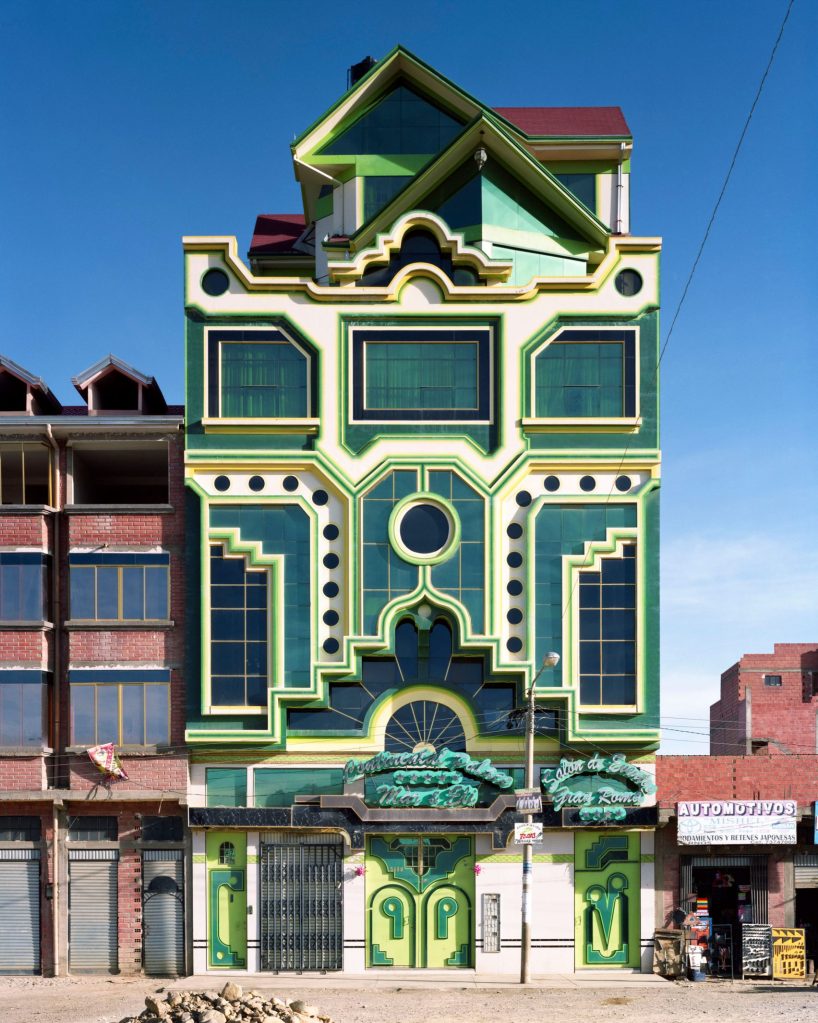
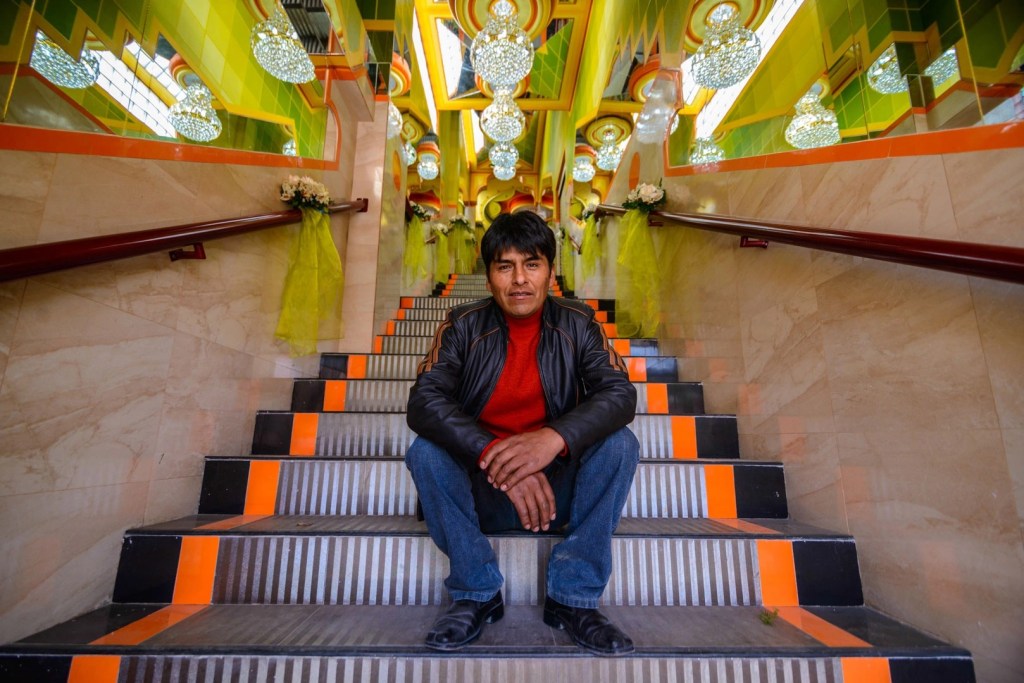
I wrote briefly in my post about chromatic politics about the shoehorning of women artists in the Bauhaus school to textile-based art forms. And how while fiber arts and decorative arts are often relegated to the superficial, their influence on the so-called “fine arts” is hard to ignore, like that of the mostly-female weavers of the Aymara on the aesthetics of architect Freddie Mamani.
I don’t disagree with Greenberger’s theory of the gender pendulum swinging back in the direction of equity, and that the fiber art rage has been part of that. The way that the binary genders – men and women – have been separated and tiered has a lot to do with the way “art” and “craft” has been separated and tiered, which has given men a lot of fame and status and women a lot of obscurity. But I can’t help but wonder (!) what a gender utopia, a world where misogyny and queerphobia don’t exist, looks like.
I have a list of evolving, circular desires for gender and art – a gender ouroboros maybe.
- I want to see women included in “fine art” – painting, sculpture, architecture, etc. because women are capable of doing whatever they pursue.
- I love seeing “craft” and the women artists who practice it included in the genres of fine art, because craft requires the same level of technique and intellect that the traditional “fine arts” require. It’s important to me that the disciplines and materials we associate with fine art gets expanded in order to perforate the gender separation that’s been engineered in the art world.
- I don’t want to see fiber “craft” forever associated with women because not that all fiber artists are women and not all women are naturally fiber artists, and to believe so is gender essentialist in a way that gives me hives.
- To call craft “women’s work” at all is colonial. Craft exists across the globe, in virtually every culture, and not all cultures divide labor along the same gender lines. For instance, textile crafters in West Africa were often men (Osborne, 2024), but during the trans-Atlantic slave trade, the white slave-owning class demanded that enslaved women perform it because it was more in line with the white/European division of labor by gender (Golden, 2023).
- Not everyone lived by a gender binary like Christian Europeans did. Numerous cultures around the world recognize more than two genders, and the various nonbinary genders in those cultures also fulfilled traditional roles. Nonbinary people have also existed in binary gender cultures forever without being recognized. To only be talking about the elevation of women’s art erases the many trans nonbinary identities that are currently under attack, even by people claiming to be feminist*.
- Even as objects previously tiered as “craft” are elevated to “art”, and artists working with materials often thought of as “craft supplies” instead of “artist materials”, are being curated for the fine arts scenes, will women and nonbinary artists be fairly represented alongside male artists without their gender or cultural background novelized alongside the medium?
*If your brand of feminism aligns with Republican/right-wing politics or if you find that Nazis are agreeing with you, then you’re not a fucking feminist.
To the last point, Greenberger makes a poignant criticism of the Woven Histories exhibit at the MOMA:
The exhibition is unclear about the ties that bind many of its artists: what, for example, links an abstract painting from the ’70s by Jack Whitten and a raffia net from the ’60s by Ed Rossbach?…The exhibition also stumbles when presenting artists awaiting canonization such as Yvonne Koolmatrie, a Ngarrindjeri weaver who makes sinuous sculptures from sedge, a type of grass. These works are…lumped together with baskets by Indigenous artists, an awkward, reductive gesture that makes them feel like an afterthought.
Here, Koolmatrie’s artistry is hitched to that of other indigenous artists with, as Greenberger suggests, no real curation as to why. Is it enough to say that “we all weave”, or does this decontextualize the places and cultures these individual artists come from? The importance of cultural specificity to art and craft cannot be overstated, and it is frequently missing from a lot of discourse about art and gender that I’ve seen and read. Race and gender are linked in systems of oppression, so they have to be discussed together in cultural criticism. After all, the Western/European art institutions that have displayed stolen precolonial indigenous art have historically not challenged the binary thinking of gender by acknowledging nonbinary artists.
I grew up near the Baltimore Museum of Art, and even as a child I could understand the way most of the exhibits were organized. These rooms, the impressionists. Over here, the impressive collection of Matisses. In this stark white and angular wing, the contemporary exhibit. And over here… “African Art.” All the art the museum had from across the continent, from across centuries, in cramped glass display cases instead of mounted on walls or installed like the European and American paintings and sculptures. Looking back on it now, this exhibit was distinctly anthropological, archeological, in nature. These were not meant to be considered cerebrally like the Monets and Warhols. I wasn’t meant to think about the objects’ makers as individuals. It was just a room full of things with a single tenuous connection between them: the 11.7 million square mile continent of origin.
Decades later, the BMA has gone through a total overhaul. That vague exhibit no longer exists. The new curators have gone full force into featuring living artists whose works they can fully contextualize. They’ve sold a number of extremely famous works (to the rage of many white patrons) to fund the acquisition of art by Black, indigenous, and queer artists. Last year, they installed “Walk a Mile in My Dreams” an exhibit dedicated to the work of Joyce J. Scott, a Baltimore artist who works in a plethora of different mediums and techniques, including fiber, weaving, and crochet. Scott’s work explores race, sexuality, violence, and natural destruction, and she’s as influenced by the cultures and artistic techniques of the many places she’s traveled as she is by her own family’s long history of making.
I haven’t visited the Woven Histories exhibit myself, so I can’t speak personally to the level of explanation provided by the curator as to the connection between the different works, but it sounds like more specific context is needed to draw these connections. Maybe it takes an artist-specific installation, like “Walk a Mile in My Dreams”, to fully do justice to any artist.
I have been thinking about my relationship to my gender for my entire life, and Greenberger’s article gave me a great vehicle to talk about it in relationship to the fiber crafts that have become such a big part of my day-to-day life (and my livelihood, at one point). This hobby, once necessary labor in a preindustrial age, taken for granted as “women’s work”; this women’s work that my own 94-year-old meat-and-potatoes mans’ man Navy veteran grandfather was taught as a boy; this women’s work that I have seen loved by cis men, gay and straight; this women’s work that I have seen relished by trans and non-binary people at fiber festivals.
Even though us cis women are overrepresented in fiber arts, they don’t belong to us, and that makes me feel free. It’s not enough that I should feel empowered by the things that make me “feminine” – I want a femininity that demands nothing of me. The gender utopia I hope for is a decolonized one, a non-binary one. One where every singular person is recognized for their skills and artistry no matter their identity, without it having to reflect on anyone else.


 Smitty is Knitting